

 Czech
Czech Slovak
 German
 Romanian
 Ukrainian
 Italian
 French
 Dutch
Dutch Polish
Charging the car battery - Instructions
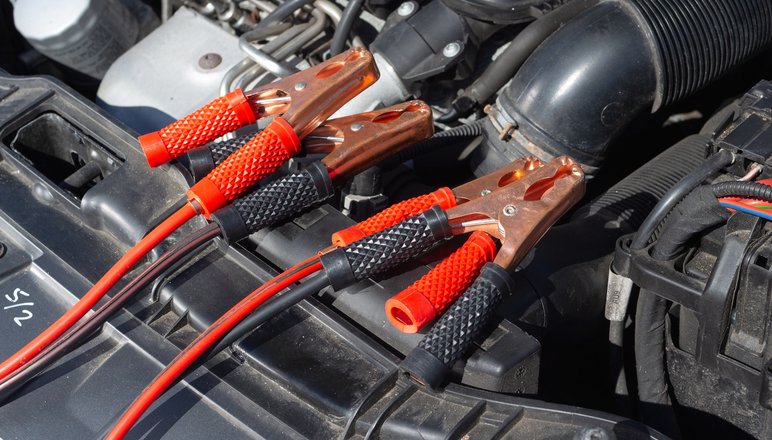
You don't have to go to the repair shop right away with a dead car battery. Read how to charge it safely at home.
Where is the car battery located?
In most ordinary cars, the car battery is in the engine compartment under the front hood. Some cars (such as BMW) then have it in the trunk of the vehicle under the floor or in one of the side compartments. Other vehicles (motorhomes, large SUVs) may even have multiple car batteries. You can usually find the exact location of the car battery in the owner's manual.
Charging a connected car battery
If for some reason you cannot or do not want to disconnect the car battery, you can charge the battery directly in the vehicle. The car should not be damaged by such charging, on the contrary, the control units of modern cars recognize that charging is taking place and can adapt the electronics accordingly. Use this procedure for charging:
1. Turn off the engine and ignition.
2. Unplug all appliances in the car (phone chargers, dash cam, etc.).
3. Remove the plastic pole caps from the car battery (if there are any on the battery).
4. Connect the red cable to the positive pole of the car battery (with a plus sign).
5. Connect the black cable to the negative pole of the car battery (with the minus sign).
6. Turn on the charger and set the desired program, possibly also the voltage (for passenger cars it is usually 12 volts).
7. After charging the car battery, turn off the charger and disconnect it from the mains.
8. Disconnect the black cable (negative pole) from the car battery.
9. Disconnect the red cable (positive pole) from the car battery.
10. Put back the plastic pole covers.
Charging a disconnected car battery
If you don't have a long enough extension cord or simply don't want to leave the charger in the car unattended, you can remove the car battery from the car and charge it at home. Keep in mind, however, that disconnecting and removing the car battery requires appropriate tools and, depending on the car model, can be quite a complicated operation.
1. Turn off the engine and ignition.
2. Unplug all appliances in the car (phone chargers, dash cam, etc.).
3. Make sure you have your vehicle keys with you. When the battery is disconnected, the car may lock arbitrarily.
4. Disconnect the negative plug (with the minus sign).
5. Disconnect the positive plug (with the plus sign).
6. Remove the car battery from the vehicle (remember to lock the car manually - electronic locks do not work when the battery is disconnected).
7. Connect the charger to the car battery. First, the red cable to the positive pole (with a plus sign). Then the black cable to the negative pole (with a minus sign).
8. Turn on the charger and set the desired program.
9. After charging the car battery, turn off the charger and disconnect it from the mains.
10. First disconnect the black cable (negative pole), then the red cable (positive pole).
11. Return the battery to the vehicle.
12. Connect the positive plug (with a plus sign).
13. Connect the negative plug (with a minus sign).
How long does it take to charge a car battery?
Charging a car battery usually takes a few hours, even overnight. It depends on its size, condition and capabilities of the charger.
How to tell if a car battery is fully charged
- Indicator on the charger: Many chargers indicate the battery's state of charge. If it shows full charge, there is no need to continue charging.
- Measuring with a voltmeter: The most accurate way to check the battery's condition is by measuring its voltage with a voltmeter. Always measure the battery when it is disconnected from the charger and the vehicle.
What voltage should a car battery have
- A fully charged car battery has a voltage higher than 12.6 V. Charging is not necessary.
- A partially charged car battery has a voltage between 12.4 and 12.6 V. It is recommended to recharge the battery.
- A discharged car battery has a voltage lower than 12.4 V. The battery needs to be recharged.
Why does the car battery discharge?
Excessive discharge of the car battery can have several different causes:
- Driving a car only for short distances
If you only drive short distances with the car, the car battery does not have time to recharge sufficiently and thus slowly discharges. That's why it's a good idea to take the car on a longer trip from time to time to fully recharge the battery. - Charging error
Under normal circumstances, the car battery is recharged using the alternator while driving. In the event of its failure, the car battery will be discharged very quickly by driving, as it must supply energy to all the vehicle's systems. You can usually recognize a charging fault by the warning light on the dashboard. - The car battery is dead
Even car batteries have a certain lifespan. They usually last 4 to 6 years of operation, but some special types may have a shorter lifespan. - Human error
The battery can be discharged very easily even if the driver leaves the lights or other energy consumer on. - Not using the car for a long time
The car draws a small amount of energy from the battery even when it is parked. Above all, modern cars have many electronic systems (alarm, remote control using a mobile app, etc.) that require a small but constant supply of electricity. When parked for a long time, they can completely discharge the car battery.
Dead battery in electric cars
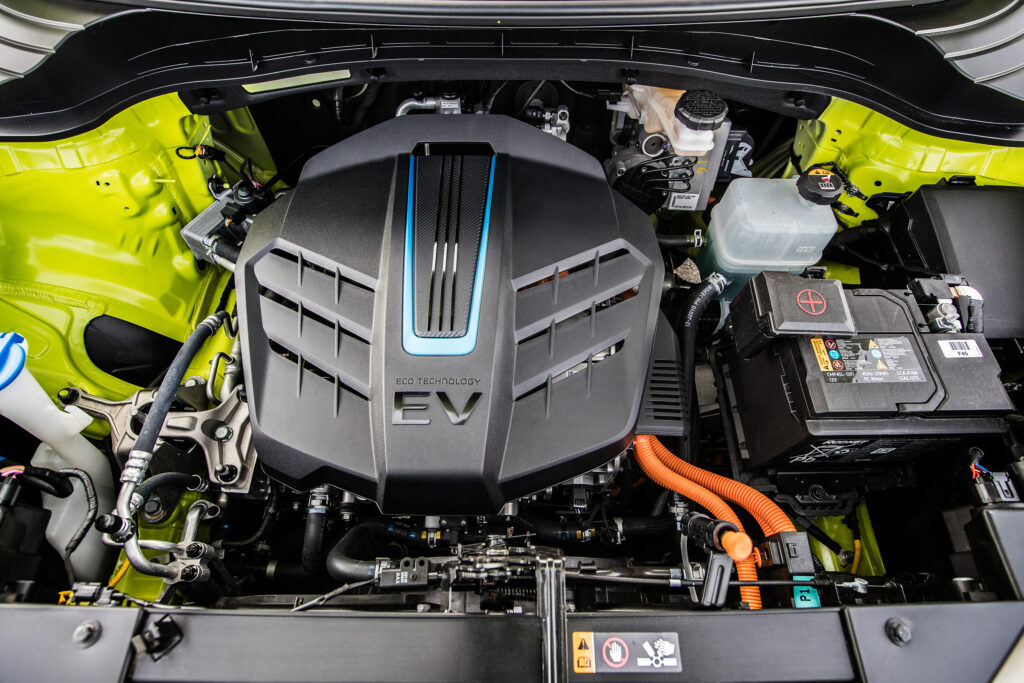
You may be surprised to learn that even electric cars have a classic 12 volt car battery that can discharge. This creates a somewhat confusing situation where even a fully charged electric car cannot be unlocked and started. The explanation is simple, the main battery of the electric car is used for its drive, while the small 12 volt car battery operates the door locking, the alarm and, among other things, the start.
Discharged car batteries can also be charged with an electric car, but a visit to a repair shop is recommended, where they will carry out detailed measurements.
Buying a used car? ⚠️ Check its history!
Choosing the right used car can be a challenge. Many of them may have minor or major damage, some have a rolled odometer, and some may even be reported stolen.
That's why it's important to always check the history of the car you're about to buy. Fortunately, this can be easily done online at Cebia.com, the largest database of used vehicle records in Europe 🌍. On Cebia.com, you can check the following information (the scope of information varies for each vehicle):
- Odometer Check (Mileage History)
- Damage Check
- Theft Check
- Taxi Check
- Advertisement Photos and Records
- Service History
- Records from State Databases
- and much more
Check vehicle history:
💰 Tip: Want to get a 10% discount on Car History Report? Simply subscribe to our newsletter and we’ll immediately send the discount to your email -> Subscribe.