

 Czech
Czech Slovak
 German
 Romanian
 Ukrainian
 Italian
 French
 Dutch
Dutch Polish
Warning lights in car
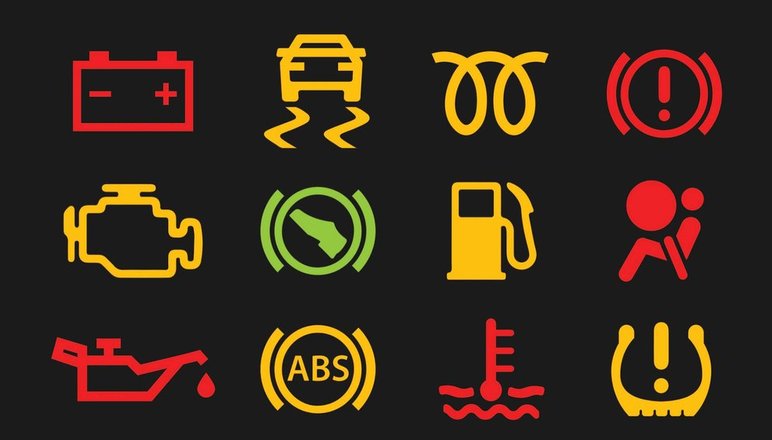
The warning lights in the car are the basic way the vehicle informs the driver about its condition or faults. What do they mean and why do they have different colors?
The warning lights in the car are the basic way the car informs the driver about its condition, needs or defects. It is therefore very important to know at least the most important ones and to have an operating manual handy in the car, where they are all explained in detail for a particular model.
Warning light color
The warning lights in the car can have three colors. For simplicity, the colors of traffic lights are chosen, where red means "Stop!", orange "Caution" and green "Go".
🟥 Red warning light = Stop!
A red warning light indicates either a serious fault or another obstacle preventing driving (typically the handbrake applied). If the red light is on, you should not continue driving until the fault is rectified.
🟨 Orange warning light = Caution!
An orange (or yellow) warning light indicates a warning that something may not be right with the vehicle, but it is possible to continue driving. However, it does not always mean a defect - it indicates, for example, the activation of the ABS system during hard braking.
🟩 Green warning light = You can go
The green warning light is purely informative and usually indicates the activation of one of the car's functions. Most often, you need the lights on or the STOP - START system activated.
Brake warning lights
Low brake fluid pressure
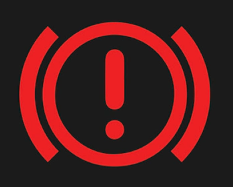
The red brake warning light indicates a serious fault in the brake system preventing further driving. Most often, it is a lack of brake fluid. The same warning light containing the letter "P" instead of an exclamation mark then means the handbrake is applied.
Wear of the brake pads

The orange brake warning light without text indicates brake pad wear. A sensor located in the plates detected the decrease in their thickness. You can continue driving, but in the near future you should visit a garage and have the pads replaced.
ABS system malfunction
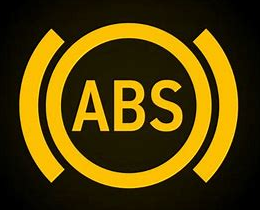
The orange warning light with the text "ABS" indicates a malfunction of the ABS (a system that prevents the wheels from locking during hard braking). It is possible to continue driving, but visit a garage as soon as possible and have the brakes checked. Flashing of the warning light during hard braking does not indicate a fault, but only the activation of the system.
Engine warning lights
Coolant overheating
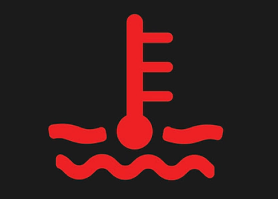
The red coolant warning light indicates engine overheating. Stop the car as soon as possible and turn off the engine. The cause is most often a lack of coolant. After the engine has cooled down thoroughly (hot coolant can seriously burn you!), you can check it and top it up if necessary. If the warning light is on even when the fluid level is correct, you need to take the vehicle to a garage as soon as possible.
Charging error
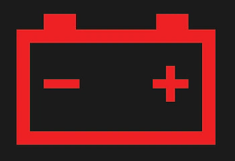
The red warning light of the car battery means that charging is not working - most often due to a broken alternator. At that moment, the vehicle cannot generate electricity and is powered only by the battery. If the light is on by itself, it is possible to take the car to the nearest garage (you have to hope that the flashlight can handle it). However, if the red coolant or oil warning light is on at the same time, do not drive the vehicle anywhere!
Low engine oil pressure
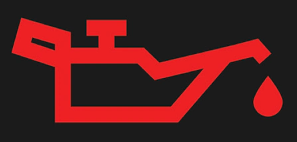
The red oil warning light indicates insufficient engine oil pressure for safe engine operation. Stop the vehicle as quickly as possible and turn off the engine, continuing to drive could irreparably damage the engine. After stopping, wait a while, measure the oil level and, if necessary, top up to the maximum. If the light is on even with the correct oil level, the oil pump first failed or oil is leaking from the engine. In this case, the vehicle must be towed to a garage.
Low engine oil level

The orange oil warning light indicates a low engine oil level. You can continue driving, but check the oil level as soon as possible and top it up if necessary. When choosing engine oil, follow the oil specification recommended by the vehicle manufacturer.
Improper combustion
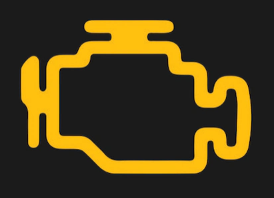
The orange engine warning light indicates improper fuel combustion. The cause can be a whole range - from a faulty lambda probe to injectors or an EGR valve. Sometimes the light can also be accompanied by the engine switching to emergency mode. You can continue driving, but visit a garage as soon as possible, where they will detect the defect.
Glow plug system malfunction

The orange glow warning light that lights up or flashes while driving means a diesel engine glow plug malfunction. You can continue driving, but because the warning light can mean a number of problems, it's a good idea to visit a car service as soon as possible.
Particulate filter (DPF) clogging
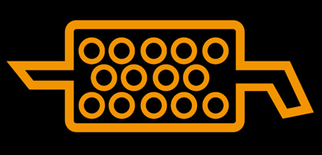
The orange DPF warning light means that the particulate filter is clogged. If you only drive short distances, it is a good idea to take the car on a longer trip around the county or highway, where the filter can burn out while driving. If even a longer drive at a higher speed does not help, the filter is probably so clogged that it needs to be replaced or thoroughly cleaned at a car service.
Other warning lights
ESP mulfunction
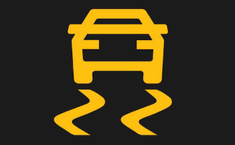
The orange ESP warning light indicates a malfunction of the electronic stabilization system. You can continue driving, but you should have the vehicle inspected by a garage. Flashing itself during a sharp turn or turning on snow does not indicate a fault, but only warns of the intervention of the system against imminent skidding.
Low tire pressure
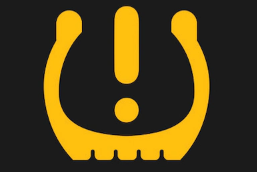
The orange tire pressure warning light means either a malfunction of one of the sensors or a drop in pressure in one of the tires. Stop and check tire pressures as soon as possible. If they are fine, it may be a faulty sensor or a simple system error. If the light comes on even after the engine is restarted, then the sensor will be the first to blame.
⚠️ When buying a used vehicle, check not only the warning lights
If you are choosing a used car, the warning lights are a basic indicator of its condition. However, it doesn't tell you much about the vehicle's history.
Mileage check, damage history, service records, photos and much more can be discovered online at Cebia.com which is the largest database of used vehicle records in Europe.
By checking the history of the vehicle, you can save a lot of money and time when choosing a car.
Check vehicle history:
💰 Tip: Want to get a 10% discount on Car History Report? Simply subscribe to our newsletter and we’ll immediately send the discount to your email -> Subscribe.
---
DE version: Warnleuchten im Auto
CZ version: Kontrolky v autě - Co která z nich znamená?
SK version: Kontrolky v aute
RO version: Martori de bord