

 Czech
Czech Slovak
 German
 Romanian
 Ukrainian
 Italian
 French
 Dutch
Dutch Polish
VIN (Vehicle Identification Number)
VIN is a unique identifier of each vehicle. What does it contain? How to check it? And where to find it?
VIN (or Vehicle Identification Number) is an internationally recognised, unique identifier of motor vehicles (including cars, vans, lorries, motorhomes, motorbikes and more). Each VIN code is made of a unique combination of numbers and letters. However, there are certain letters you will never see as part of a VIN. To be more specific, letters O, I and Q are never used, since they could be confused with the numbers 0, 1 and 9.
The VIN code serves as a vehicle "ID number". You could say it is a bit like your insurance number or the number of your passport. But in addition to its function as an identifier, VIN can also be used to retreive important details about your vehicle, such as its manufacturer, model, engine code, date of manufacture, mileage history, service history and previous damage. You can read more on how to use VIN codes to get car information in this article.
Composition of VIN code
.png?v=1612948663156)
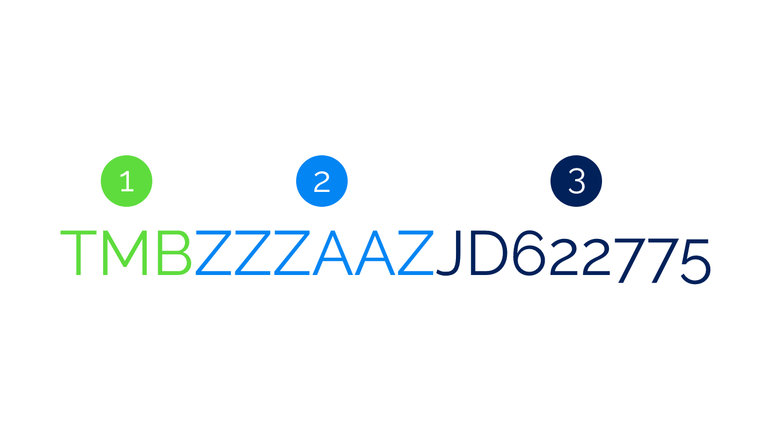
1. First three characters of the VIN code identify the manufacturer of a given vehicle. The very first character stands for the continent in which the car manufacturer resides. For example, VINs of European cars start with the letters S to Z. Then, the second VIN character specifies the manufacturer's country. Vehicles from Czech manufacturers have VIN codes starting with the letters TJ to TP - for example, Škoda Auto uses the combination TMB.
2. Fourth to ninth characters of a VIN are sometimes referred to as a vehicle description code. Each manufacturer can design these characters according to their own choice. In general, fourth to ninth characters usually encode technical information about the vehicle such as its model, body type, engine type, production series, etc. Furthermore, the ninth character is used by some manufacturers (especially in North America) as a so-called check digit - it works as a protection against incorrect VIN entry.
3. Last eight characters of a VIN form a unique serial number of the particular vehicle. Each manufacturer sets its own mechanism for assigning the last eight characters of a VIN but - as a rule - the last four characters of any VIN are always numbers.
Frequent Locations of the VIN code
You can read more about where to find VIN codes in the article: Where do I find VIN code? But in general, VINs are most commonly located:
- In the small technical certificate
- In the large technical certificate
- Under the windshield
- On the bodywork in the engine or luggage compartment
- On the type plate on the front door or pillar
Purpose of VIN
VIN is the most important identifier of any vehicle. Most databases, including databases of car manufacturers, vehicle registries, the police, car repair firms and insurance companies use VINs to identify and categorise vehicles. It is therefore necessary to know your car's VIN code in many situations, including when signing a car purchase agreement, transferring the vehicle to the authorities or taking out insurance.
By using the VIN, the car can be checked and verified in the above-mentioned databases. On-line, you can find out if the car odometer has been rolled back, if it has been crashed in the past, what its service history is or when and for how much it was advertised.
Checking your VIN code online using Cebia Car History
Thanks to Cebia Car History, you can check your VIN code easily, online at Cebia.com. We are the largest database of used car records in the Czech Republic. As such, we can provide you with all the following information:
- Mileage check
- Check of previous damages (based on data from 20 countries, including Germany)
- Report of service history
- Report of previous car listings
- Theft records
- Car valuation
- + much more
Check vehicle history:
💰 Tip: Want to get a 10% discount on Car History Report? Simply subscribe to our newsletter and we’ll immediately send the discount to your email -> Subscribe.